HOW TO BREW DELICIOUS VIETNAMESE PHIN COFFEE WITH RICH, LONG-LASTING FLAVOR
Vietnamese phin coffee is a unique and iconic part of Vietnam’s coffee culture. Without the need for expensive machines, all you need is a small metal phin filter, hot water, and properly roasted ground coffee to create a bold, aromatic cup with a deep and lingering aftertaste.
However, not everyone knows how to brew Vietnamese phin coffee correctly. Many people end up with coffee that tastes sour, overly bitter, weak, or drips too quickly, resulting in an unbalanced flavor. In this guide, you’ll learn the complete brewing process — from choosing the right coffee beans and water ratio to controlling temperature and compression — so you can consistently make great phin coffee at home.
1. What Is Vietnamese Phin Coffee?
Vietnamese phin coffee is a traditional brewing method that uses a small metal drip filter called a “phin.” Hot water slowly passes through the coffee grounds and drips into the cup below, producing a rich and concentrated brew.
Key characteristics of Vietnamese phin coffee:
- Strong aroma
- Bold and deep flavor
- Long-lasting aftertaste
- Heavy body
- Can be enjoyed black or with condensed milk
2. Why Do Many People Fail to Brew Good Phin Coffee?
Although phin coffee seems simple, it is highly sensitive to several factors:
- Grind size
- Water temperature
- Coffee-to-water ratio
- Compression pressure
- Extraction time
Common Problems and Causes
| Problem | Cause |
| Coffee drips too fast | Grind too coarse or coffee pressed too lightly |
| Coffee drips too slowly | Grind too fine or coffee pressed too tightly |
| Sour taste | Water not hot enough or under-extraction |
| Harsh bitterness | Over-roasted beans or over-extraction |
| Weak and watery | Too little coffee or too much water |
3. Ingredients for Great Vietnamese Phin Coffee
3.1 Choosing the Right Coffee Beans
The quality of the coffee beans is the most important factor.
Robusta
Robusta coffee is ideal for people who prefer:
- Strong flavor
- High caffeine content
- Bold aftertaste
- Low acidity
Arabica
Arabica coffee offers:
- More fragrance
- Bright acidity
- Lighter finish
- More complex aroma
Robusta–Arabica Blend
This is one of the most popular choices because it delivers:
- Good aroma
- Strong flavor
- Smooth drinkability
- Excellent compatibility with phin brewing
Common blend ratios include:
- 70% robusta – 30% arabica
- 60% robusta – 40% arabica
3.2 Best Roast Level for Phin Brewing
Medium to Dark Roast Works Best
Recommended roast levels:
| Roast Level | Characteristics |
| Medium Roast | Balanced flavor and aroma |
| Medium Dark Roast | Richer and more suitable for Vietnamese taste |
| Dark Roast | Strong bitterness and deep aftertaste |
If the roast is too light:
- Coffee may taste sour
- Body becomes thin
- Lacks depth
If the roast is too dark:
- Coffee tastes burnt
- Aroma is lost
- Bitterness becomes harsh
3.3 Choosing the Right Grind Size
Grind size is extremely important.
Ideal Grind: Medium-Fine
The grounds should be:
- Finer than pour-over coffee
- Coarser than espresso
If the grind is too fine:
- The phin may clog
- Coffee becomes bitter
- Dripping takes too long
If the grind is too coarse:
- Coffee drips too quickly
- Flavor becomes weak
- Aroma is reduced
Simple Tip
The texture should feel:
- Slightly sandy
- Not clumpy
- Not overly powdery
3.4 Essential Brewing Equipment
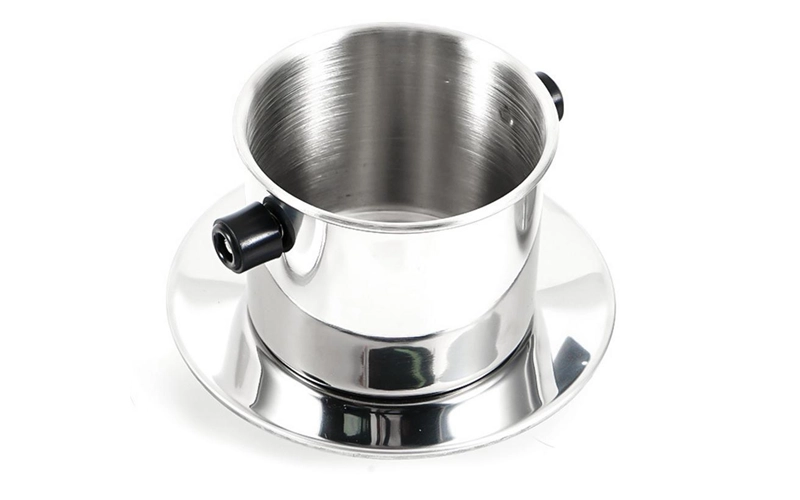
Vietnamese Phin Filter
Recommended features:
- Stainless steel phin
- 160ml – 170ml size
- Evenly distributed filter holes
- Good heat retention
Other Tools
- Glass cup
- Kettle
- Digital scale
- Spoon
- Timer
3.5 Standard Brewing Ratio
This beginner-friendly recipe is easy to follow.
| Ingredient | Ratio |
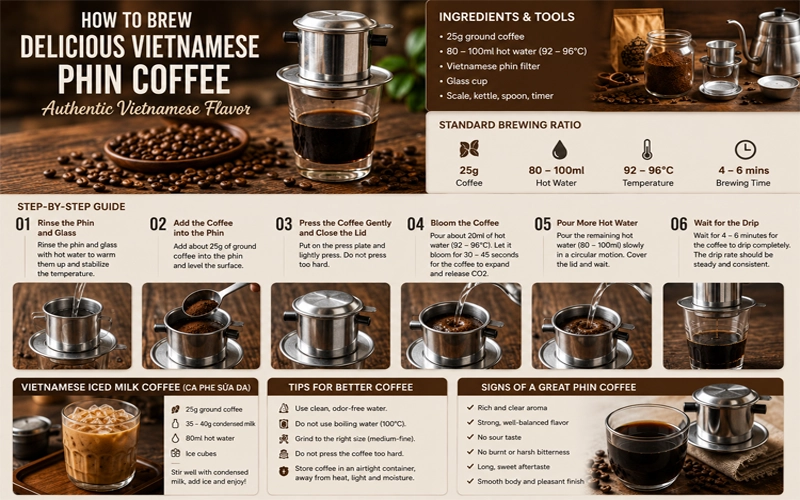
| Coffee | 25g |
| Hot water | 80 – 100ml |
| Water temperature | 92 – 96°C |
| Extraction time | 4 – 6 minutes |
4. Step-by-Step Guide to Brewing Vietnamese Phin Coffee
Step 1: Rinse the Phin with Hot Water
This helps:
- Warm up the phin
- Stabilize temperature
- Reduce heat loss during brewing
Step 2: Add Coffee Grounds
Use approximately: 25g of coffee for a 160-170ml phin, Use approximately 25g of ground coffee for a 160–170ml phin filter. Gently shake the phin to remove fine particles that may pass through the filter screen, then level the coffee bed evenly before brewing.
Step 3: Place the Press Plate
Do not compress too hard.
Apply just enough pressure to:
- Keep the grounds stable
- Ensure even water flow
Step 4: Bloom the Coffee
Pour about: 20ml of hot water
Let it bloom for: 30 – 45 seconds
This stage helps:
- Release CO2
- Expand the coffee grounds evenly
- Improve extraction consistency
Step 5: Pour the Remaining Water
Slowly pour the remaining water in circular motions.
Total water amount: 80 – 100ml, Then place the lid on top to retain heat.
What Is the Ideal Drip Time?
Ideal Extraction Time: 4 – 6 Minutes
If it finishes in under 3 minutes:
- The extraction is too fast
- Coffee may taste weak
- The extraction is too slow
- Coffee may become overly bitter
- About 1 drop per second at first
- Then a slow and steady flow
5. How to Make Vietnamese Iced Milk Coffee
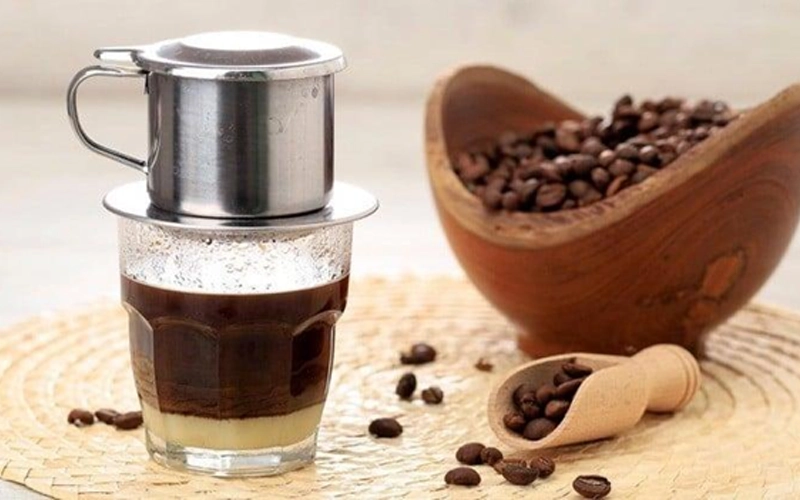
Vietnamese iced milk coffee is one of the country’s most famous coffee drinks.
Basic Recipe:
- 20-25g coffee
- 20 – 35g condensed milk
- 80ml hot water
- Ice cubes
- Stir the coffee with condensed milk
- Add ice
- Shake or stir gently
- Rich
- Creamy
- Aromatic
- Perfect for hot weather
6. Tips for Better Phin Coffee
Use Clean Water
Water makes up more than 90% of a cup of coffee.
Recommended:
- Filtered water
- No chlorine smell
- Moderate TDS level
Water at 100°C can:
- Burn the coffee
- Create harsh bitterness
- Destroy aroma
Grind Coffee Right Before Brewing
Coffee quickly loses aroma after grinding.
Best practice:
- Grind only what you need
- Brew immediately after grinding
Store Coffee Properly
Keep coffee in:
- Airtight containers
- Cool, dry places
- Away from direct sunlight
- Away from heat and moisture
Should You Use Butter, Caramel, or Flavorings?
Some traditional coffee products use:
- Butter
- Caramel flavoring
- Chocolate flavoring
If you prefer a more authentic experience:
- Choose naturally roasted coffee
- Avoid artificial flavorings
7. What’s the Difference Between Phin Coffee and Espresso?
| Criteria | Vietnamese Phin Coffee | Espresso |
| Brewing method | Slow drip extraction | High-pressure extraction |
| Brewing time | 4 – 6 minutes | 25 – 30 seconds |
| Flavor | Bold and deep | Highly concentrated |
| Body | Heavy | Very heavy |
| Equipment | Simple filter | Espresso machine |
8. How to Recognize a Good Cup of Phin Coffee
A properly brewed cup of Vietnamese phin coffee should have:
- ✅ A rich aroma
- ✅ A long-lasting aftertaste
- ✅ No harsh sourness
- ✅ No burnt bitterness
- ✅ A balanced heavy body
- ✅ A subtle sweetness lingering in the throat
Learning how to brew delicious Vietnamese phin coffee not only helps you create a richer and more flavorful cup but also allows you to experience a unique part of Vietnamese coffee culture.
As long as you pay attention to:
- Choosing the right beans
- Using the correct grind size
- Controlling water temperature
- Adjusting extraction time
References
1. International Coffee Organization (ICO) – Coffee Processing & Brewing Knowledge
2. Specialty Coffee Association (SCA) – Coffee Brewing Fundamentals
3. Coffee Quality Institute (CQI) – Coffee Extraction Standards
4. Vietnam Coffee-Cocoa Association (VICOFA) – Thông tin ngành cà phê Việt Nam
5. “The Professional Barista’s Handbook” – Scott Rao
6. “Coffee Brewing Handbook” – Ted R. Lingle
7. “The World Atlas of Coffee” – James Hoffmann
8. Tài liệu nội bộ về rang xay và chiết xuất cà phê phin truyền thống Việt Nam
9. Kinh nghiệm thực tế từ barista và roastery chuyên về cà phê Việt Nam
10. Các tiêu chuẩn chiết xuất cà phê phổ biến về:
- Brew ratio
- Extraction time
- Water temperature
- Grind size calibration
11. Vno Coffee Bean - https://organiccoffee.vn - Cà phê hữu cơ
Sales Department
Company Information
📖 Bài viết liên quan
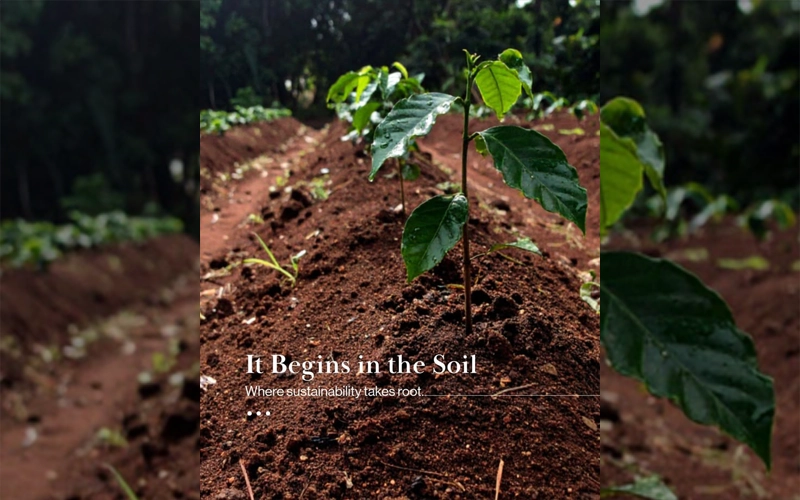
WHAT IS ORGANIC COFFEE? HOW IS IT DIFFERENT FROM REGULAR COFFEE?
Organic coffee is coffee that is grown and produced using natural farming methods, with little to no...
Đọc tiếp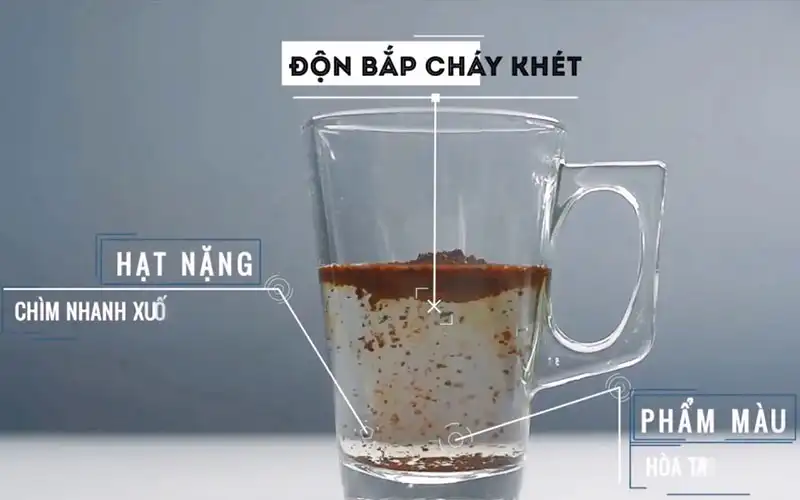
HOW TO IDENTIFY REAL VS. FAKE ORGANIC COFFEE: UNDERSTAND IT RIGHT TO DRINK IT RIGHT
In recent years, “organic coffee” has become one of the most talked-about terms in Vietnam’s coffee ...
Đọc tiếp